Best Gear for Teardrop Camping — Spring 2026 Picks
Spring camping season is almost here, and if you’re a small trailer camper, you know the drill — the gear that works for a full size RV doesn’t always translate to our smaller, more intentional setup. Every item earns its place. After a year of camping in my NuCamp T@B 320, I’ve gotten pretty selective about what makes the cut.
This spring, I’m highlighting a handful of products I’m genuinely excited about — from a brand-new power station that just launched in 2026 to a camp stove that brings serious heat without taking up serious space.
1. Goal Zero Yeti 1500 Power Station (New for 2026)
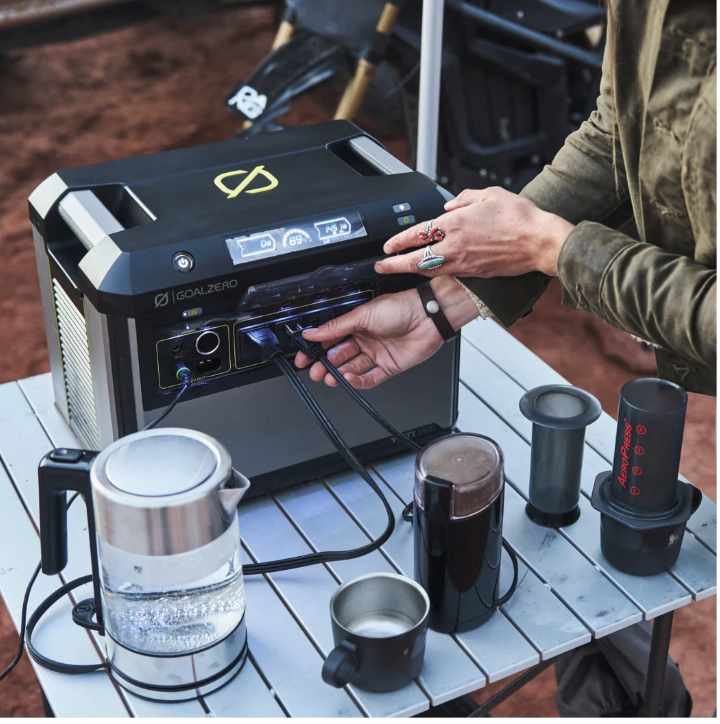

If you’ve been waiting to upgrade your portable power, this is the year to do it. Goal Zero just released the all-new Yeti 1500 for 2026 — and it’s a meaningful step up from the older 1500X model.
The biggest changes are under the hood. The new Yeti 1500 switches to a LiFePO4 battery, which delivers a 4,000-cycle lifespan — that translates to over 10 years of daily use while maintaining performance. The older lithium-ion chemistry in the 1500X simply can’t compete on longevity.
It also charges dramatically faster. The new Yeti 1500 goes from 0–80% in under an hour from a wall outlet, and hits 100% in about 1.1 hours. That’s a game-changer if you’re packing up and heading out the same day you charged or need to charge on the road. (More power means larger size so measure first.)
For teardrop campers specifically, here’s what matters:
- 1,505 Wh capacity — enough to run a 12v fridge for 3+ days, charge phones and devices, and power lights without sweating your battery level
- 2,000W inverter with 3,600W surge — handles everything from a CPAP machine to a small fan
- IPX4 weather resistance — port shields keep rain and dust out, and it’s vibration-tested for trail travel
- Dual solar input — pair it with a Goal Zero solar panel and you’ve got a fully off-grid power system
- Goal Zero app — monitor and control your power usage remotely
For those of us camping without hookups this kind of capacity and charging speed removes a lot of the anxiety around running out of power mid-trip.
Shop the Goal Zero Yeti 1500 →
NEW in 2026. Powerful, fast-charging, and weather rated, the new Yeti 1500 is built to keep up with life off-grid and last for 10+ years. Featuring a 2000W inverter, IPX4 water resistance, and 10x faster recharging, this durable power station is ready for adventure, emergencies, and more. Engineered by people who love the outdoors, get some gear you can actually treat like gear.
2. Fire Maple Saturn X Stove
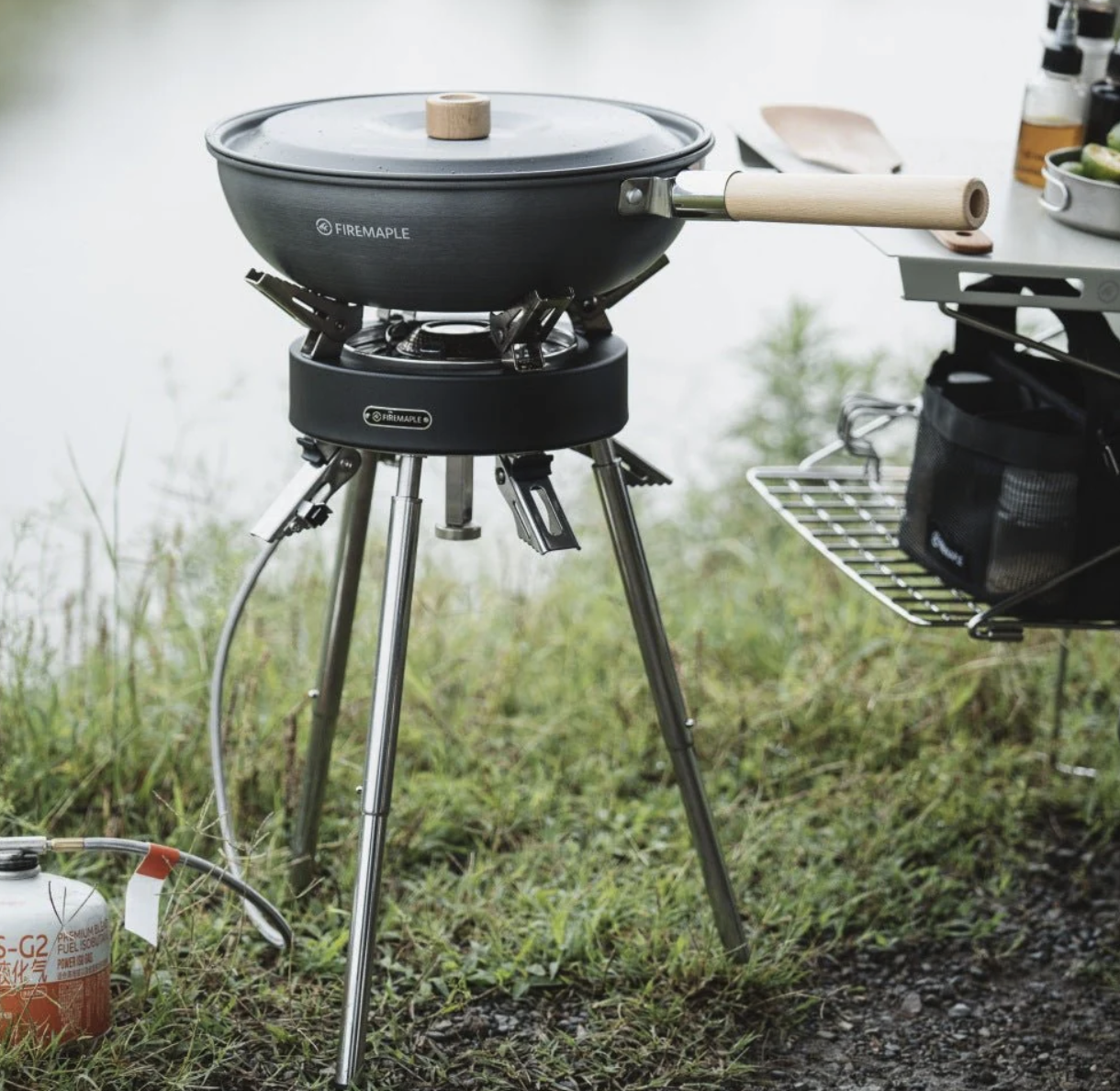
Teardrop campers tend to cook outside — our galleys are great for prep, but when it comes to actually cooking it’s so much easier (and cleaner) outside. The Fire Maple Saturn X delivers power in a surprisingly compact package.
This stove runs on standard isobutane-propane canisters (EN417 threaded — widely available) and produces 4,400W in standard upright mode. Invert the canister after a 30-second warm-up and it unleashes up to 11,000W of output — enough to boil water fast, stir-fry, or cook a full camp meal in serious wind.
What makes the Saturn X stand out for teardrop and small camper camping:
- Double preheat tubes — the fuel runs through the flame before combustion, which means consistent pressure and performance even in cold weather. This is a big deal for spring camping in the Midwest when temperatures can still dip into the 30s at night
- Adjustable tripod legs — three height settings so you can cook on uneven ground without balancing acts
- Windproof design — stable flames without needing to rig up a windscreen
- Works with 1 lb propane tanks — just add the Fire Maple Z1 Adapter, which is a popular setup for car campers since propane performs better in cold temperatures
- 3-year warranty — rare in the camp stove category
The Saturn X folds down compactly and is easy to pack in a teardrop storage compartment. It supports pots from 4″ to 12″ in diameter, so it works with everything from a small titanium mug to a full camp pot for group meals. Add the Fire Maple Grill Pan for easy cooking and clean up.
Shop the Fire Maple Saturn X →
Upgraded Saturn X Gas Stove offers superior cooking with double preheat tubes, adjustable tripod legs, and a windproof design. The extended 70cm hose and versatile support for various cookware and fuel canisters make it ideal for any adventure.
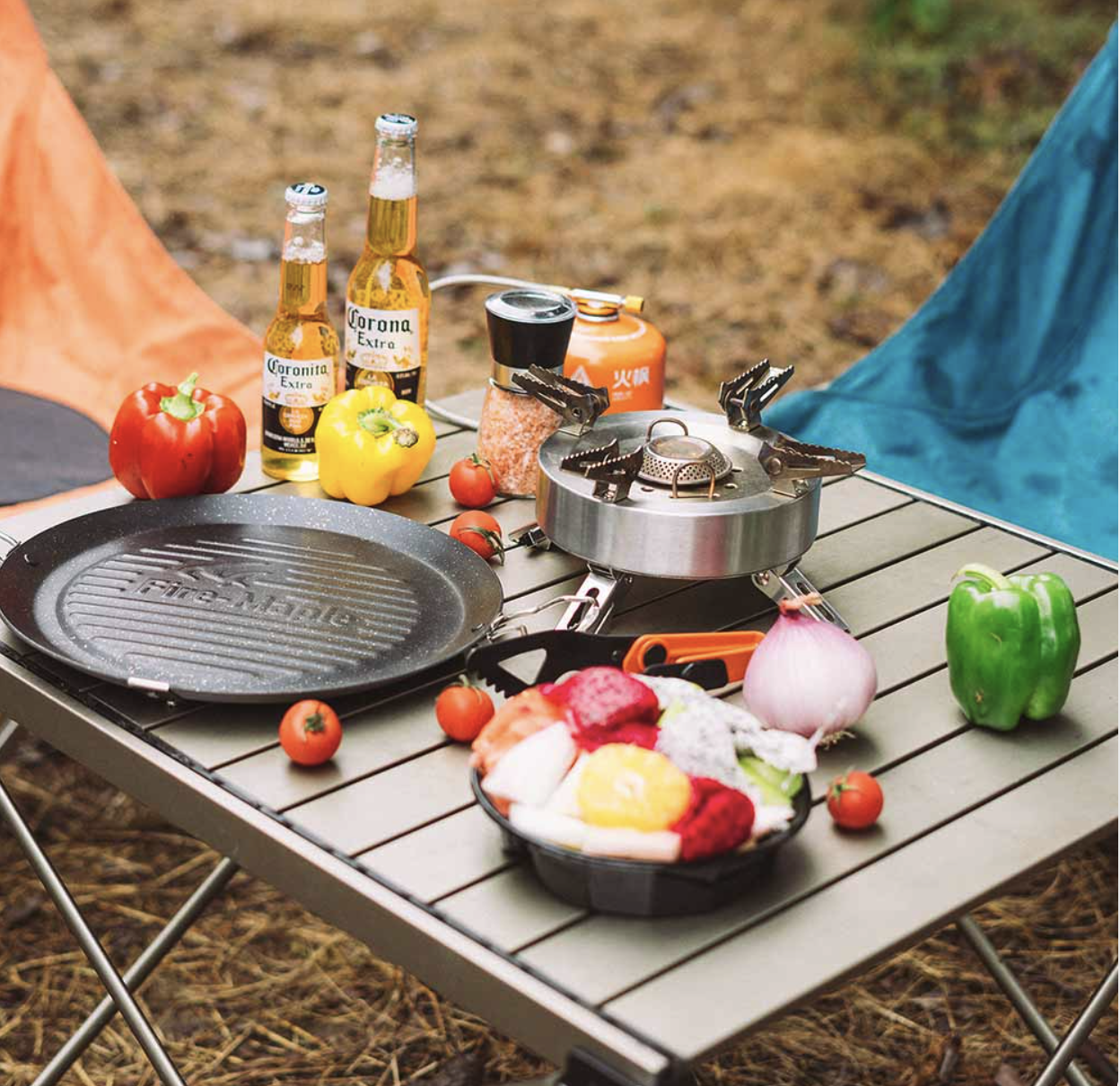
Grilling n the wild just got better. This fire-ready nonstick pan lets you sear meats, crisp veggies, and serve a full meal in one go. Built for open flames, portable stoves, and spontaneous tailgate BBQs.
3. A Solar Panel to Pair with Your Yeti 1500
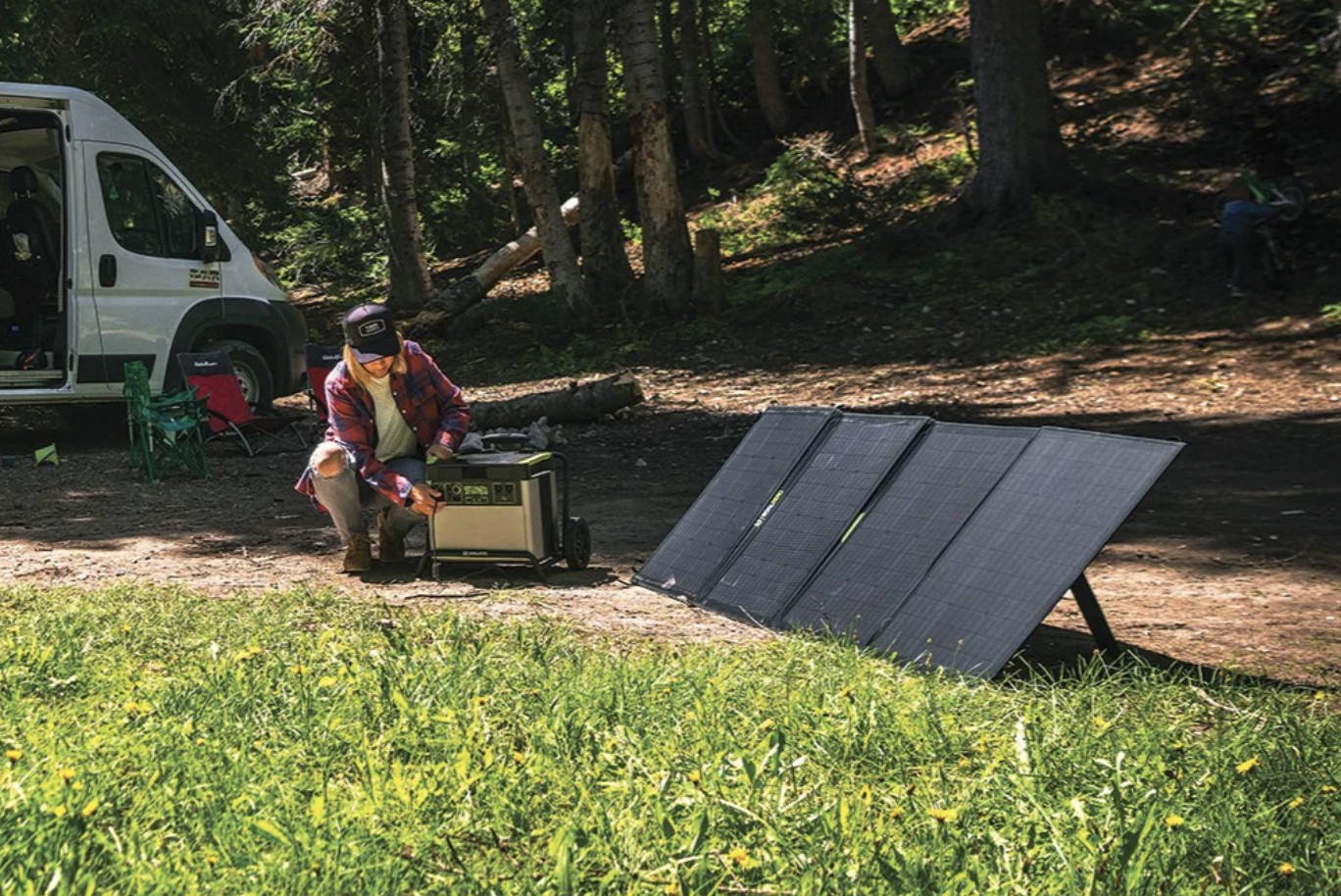
If you’re investing in the Yeti 1500, a solar panel is the natural next step — and it’s a legitimate upgrade for teardrop campers who do any dry camping or dispersed camping. The Goal Zero Nomad 200 will recharge the Yeti 1500 from empty in 9–18 hours of sun. Step up to the Nomad 400 and you’re looking at 4.5–9 hours.
For teardrop campers, the Nomad 200 is usually the sweet spot — it folds flat, packs easily, and doesn’t require a dedicated roof mount. Prop it up outside while you’re at camp and let it work.
Shop Goal Zero Solar Panels →
Ideal for situations where power needs are large, but space is limited, this panel provides 200 Watts of solar and folds down to a quarter of its full size.
4. 12V Fridge Made for Car Camping
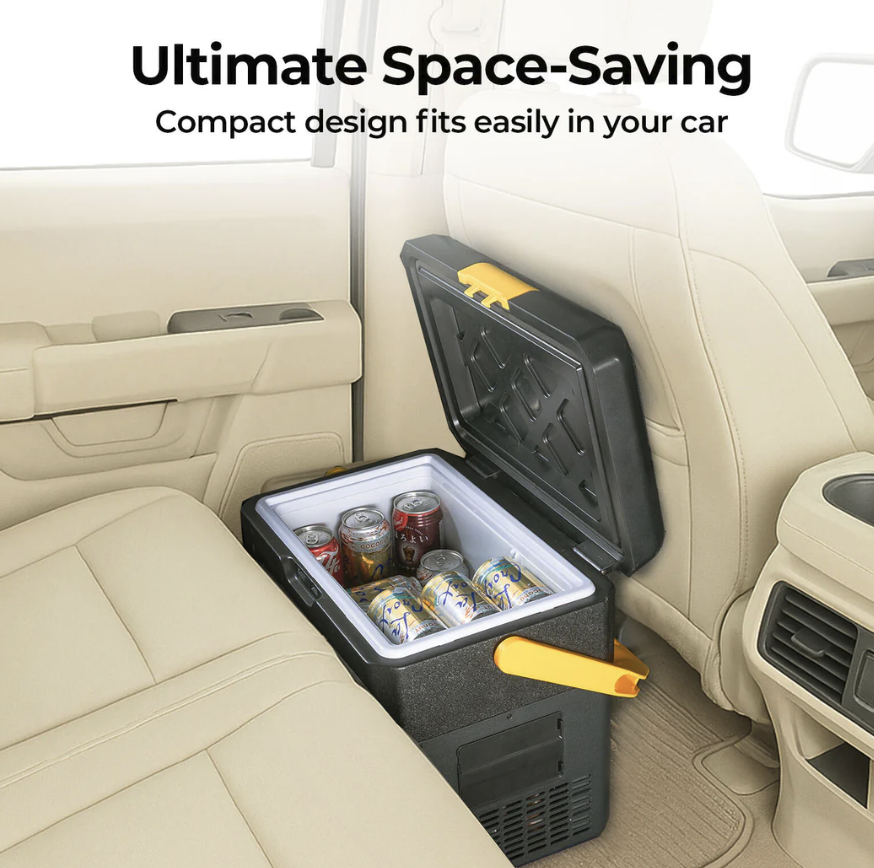
If there’s one upgrade that changes the entire teardrop camping experience, it’s ditching the cooler for a 12V compressor fridge. No more buying ice. No more soggy food on day three. No more rationing how long you keep the lid open.
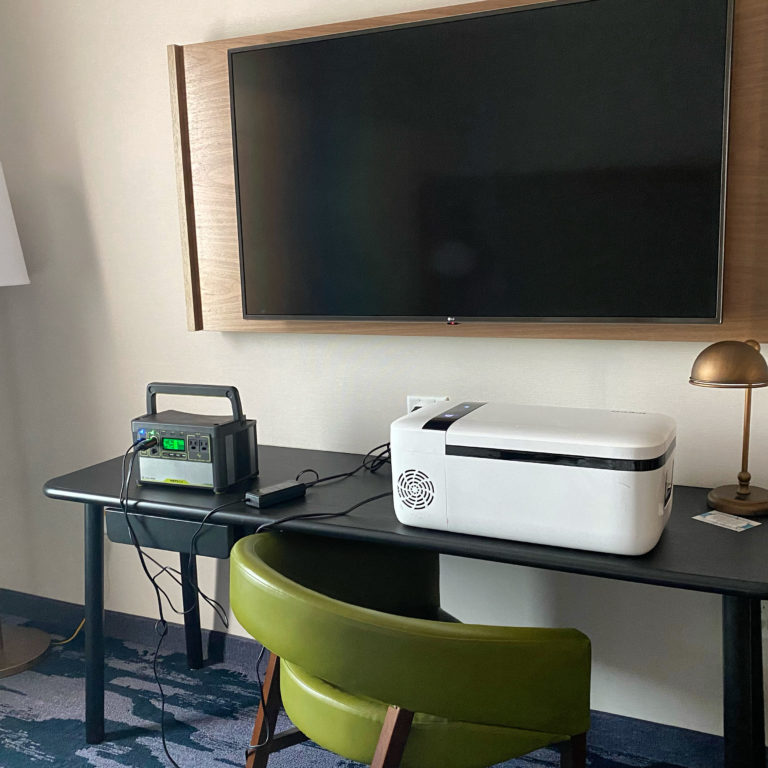
The BougeRV 12V Portable Fridge is one of the most popular options in the teardrop and small camper community — and for good reason. It uses compressor refrigeration technology (the same principle as your home fridge, not a thermoelectric cooler) which means it actually maintains temperature rather than just slowing the warm-up. In ECO mode, it draws less than 36W of power, and even on MAX mode it consumes well under 1kWh per day making it genuinely compatible with a power station like the Goal Zero Yeti 1500 for multi-day off-grid camping.
A few things teardrop campers specifically will appreciate:
- Runs on 12V/24V DC or 110–240V AC — plug it into your power station while driving and plug the power station into the car to charge. No interruption in cooling when you make a stop.
- Fits on the floor behind the seat! (on select models like the CRH 19QT) — finally a 12v Refrigerator that wont take up the whole back seat! And the perfect size for a small camper setup.
- 3-level battery protection — it monitors your power station or vehicle battery and shuts off before it causes a drain. Peace of mind when you’re sleeping.
- Rapid cooling from room temperature to 32°F in about 15 minutes — pre-cool it at home before you leave and it’ll be ready to load up when you are.
BougeRV offers several sizes, so pick based on your trailer’s storage space and how many days you typically camp. The 23QT is a great solo or couple option that fits neatly in most teardrop storage compartments. Step up to the 30QT or 42QT if you camp with family or do longer stretches between grocery runs.
Shop the BougeRV 12V Portable Fridge →
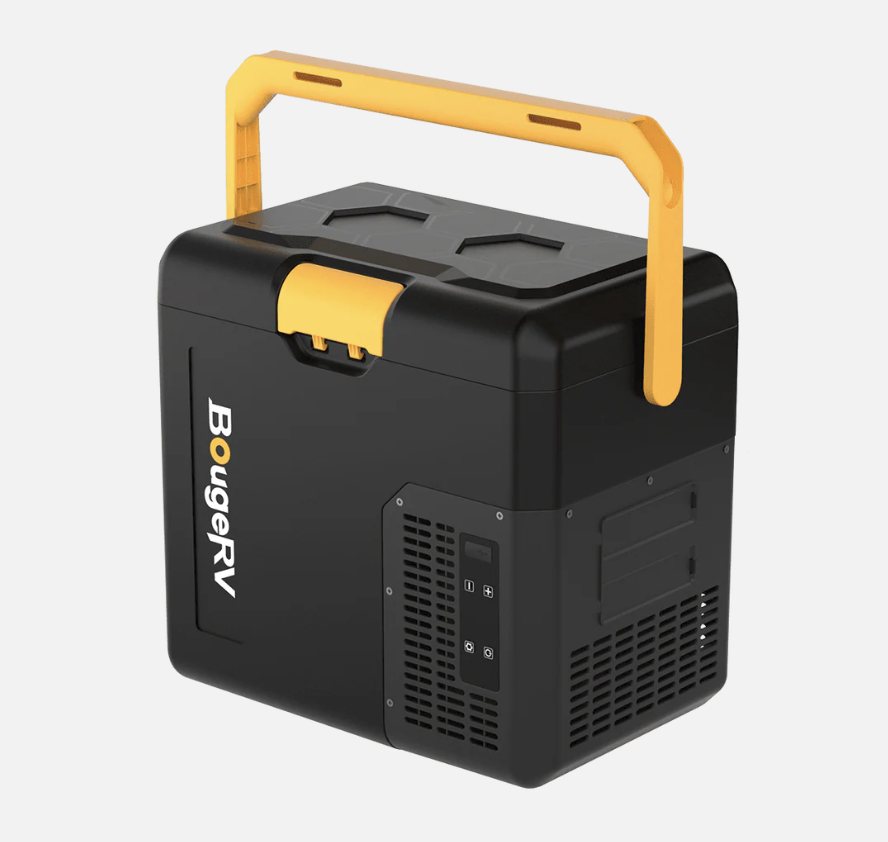
Say goodbye to bulky coolers and melted ice. This portable mini fridge for car is your sleek, space-saving solution for fresh food and cold drinks on the go. Compact enough to fit in your front or back seat, it features a one-hand grab handle, powerful cooling down to -4℉. Powered by a 173Wh detachable battery, this 12V portable fridge delivers up to 8.5 hours of off-grid cooling—no cords, no stress.
5. Clam Quick-Set Pavilion Screen Tent with Wind Panels
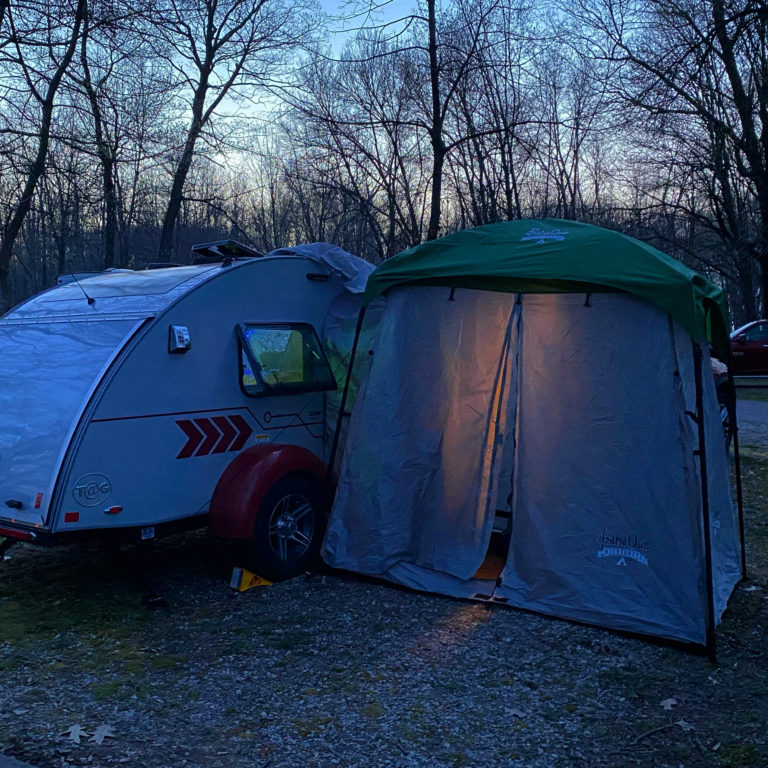
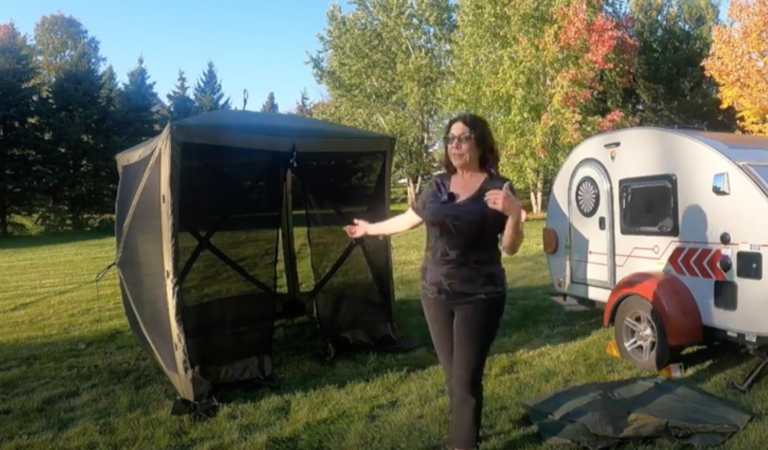
If you camp in the Midwest — or really anywhere bugs exist — a screen shelter is one of those purchases you make once and then wonder how you ever camped without it. The Clam Quick-Set Pavilion is the one I keep recommending, and spring is exactly the right time to add it to your setup before mosquito season hits.
Here’s what makes it stand out from the sea of cheap pop-up canopies:
The Pavilion is a six-sided, 12.5 x 12.5-foot shelter that sets up in about 60 seconds with no assembly required — just pop it open and stake it down. That 110-square-foot footprint fits a picnic table or several camp chairs comfortably, making it a genuine outdoor living room for your campsite rather than just a bug-free box to stand in.
The wind panels are the feature that sets this apart from basic screen tents. They roll up, roll down on the sides, with mesh windows built into the panels that can be opened or closed independently. On a calm evening you roll them up and enjoy the view. When the wind picks up or rain moves in — which in Minnesota in May can happen within the same hour — you roll them down. No scrambling, no drama.
A few other details teardrop campers will appreciate:
- No-see-um mesh with an extra-wide skirt keeps even the tiniest bugs out — critical for early spring camping when the gnats are as bad as the mosquitoes
- Extra-large 11mm flex-tested fiberglass poles give it real stability in wind, not the flimsy feel of cheaper shelters
- Packs down to 10.5 x 10.5 x 6.79 inches and weighs 41 pounds — manageable for one person to carry and fits in most truck beds or cargo areas alongside your trailer gear
- Includes 7 stakes and 5 tie-down ropes
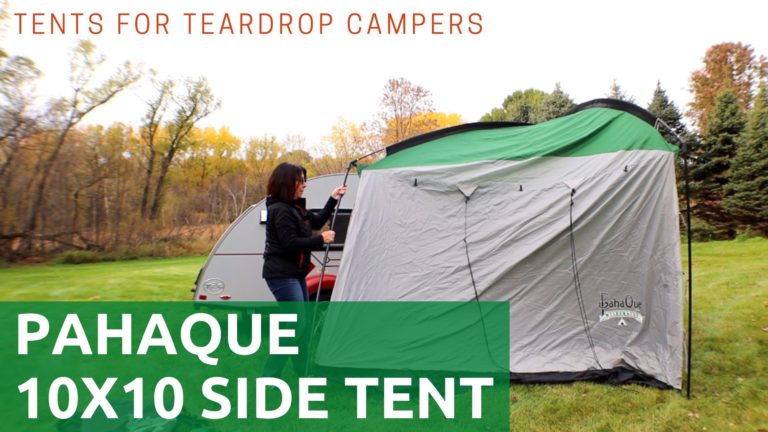
I’ve written more about Clam shelters in my teardrop side tents guide — check it out if you want a deeper comparison.
Shop the Clam Quick-Set Pavilion →

Brown - Heavy-Duty Portable Screened Shelter with Netting for Beach, Patio, and Backyard
**A Note on Power for Teardrop Campers
One question I get a lot: do I really need a 1,500Wh power station for a teardrop trailer?
It depends on how you camp. If you’re always at a campground with hookups, a smaller station like the Yeti 300 or 500 handles most needs just fine. But if you do any boondocking, dispersed camping, or multi-night stays without hookups — and you run a portable fridge, charge devices, and use a CPAP — the 1,500Wh capacity removes the mental math entirely. You stop rationing power and start just camping.
The new Yeti 1500’s fast-charge capability also means you can top it off at a campground one night and be fully independent for the next two or three. And you can use it at home in case you lose power.